Thank you for reading the Haofang Chemical Industry Blog!
Shijiazhuang Haofang New Material Technology Co., Ltd. is a trusted manufacturer and exporter of chemical raw materials with over 20 years of industry experience. We supply HPMC, CMC, PAC, Sodium Formate, SLES 70%, Calcium Formate, and other industrial chemicals to customers worldwide.
For more industry insights, product updates, and application guides, follow us on:
Facebook: https://www.facebook.com/profile.php?id=61583148969186
YouTube: https://www.youtube.com/@HAOFANGChemicalIndustry
Thank you for your support, and we look forward to helping your business grow with reliable chemical solutions.
Table of Contents
Key Points
- Guar gum and xanthan gum are both widely used industrial thickeners, but they behave differently in water-based systems.
- Guar gum is often selected for strong viscosity development, water retention, suspension and gel-forming applications.
- Xanthan gum is especially valuable where shear-thinning behavior, low-shear viscosity and suspension stability are important.
- In oilfield applications, guar gum is commonly associated with fracturing fluids, while xanthan gum is widely used in drilling-fluid rheology control.
- The best choice depends on temperature, salinity, pH, required viscosity, processing conditions and final application.
- Industrial buyers should compare actual cost-in-use rather than only the price per kilogram.
- Testing samples under real formulation conditions is one of the safest ways to choose between guar gum and xanthan gum.
Guar Gum Versus Xanthan Gum: What Is the Difference?
The guar gum versus xanthan gum comparison is common among buyers looking for thickeners, stabilizers and rheology modifiers for industrial formulations.
Although both products can increase viscosity and improve suspension, they are not interchangeable in every application. Their raw material sources, hydration behavior, rheology and resistance to environmental conditions can be quite different.
Guar gum is derived from guar seeds and belongs to the galactomannan family of polysaccharides. Xanthan gum, by contrast, is produced through microbial fermentation.
For B2B buyers, the important question is not simply which one is “better,” but which material provides the required performance at the most practical dosage and cost.
What Is Guar Gum?
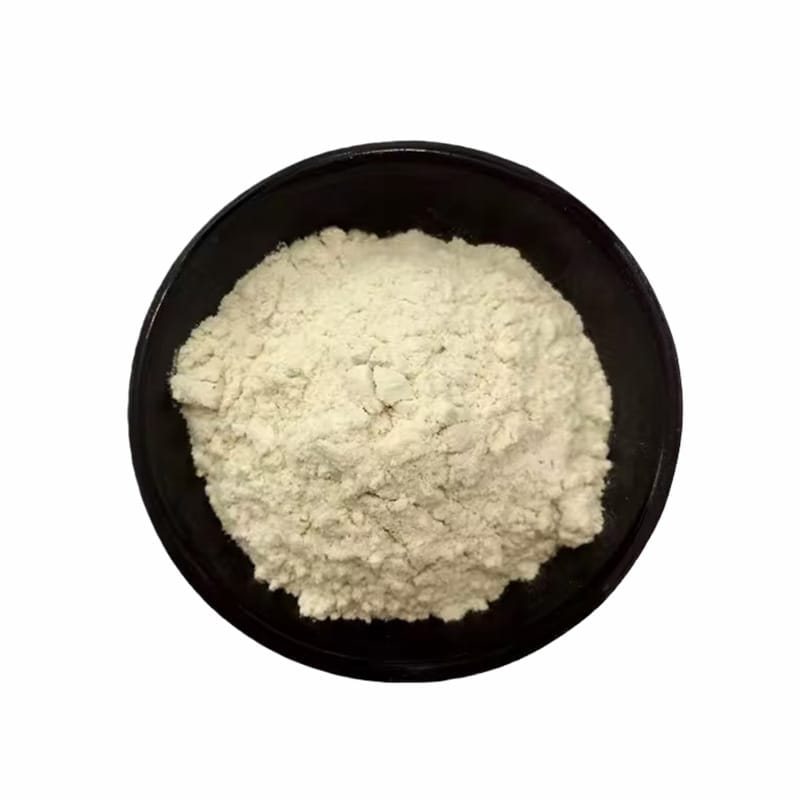
Guar gum is a plant-derived polymer widely used as a thickener, water-retention agent and suspension aid.
In industrial systems, it can rapidly develop viscosity after hydration and can also be modified or crosslinked for more demanding applications.
Haofang Chemicals supplies Guar Gum for applications including drilling, fracturing, construction and industrial thickening.
Strong Water Thickening
Guar gum can significantly increase the viscosity of water-based systems at relatively low concentrations.
This makes it useful where formulators need strong thickening without adding a large amount of solid material.
Water Retention
Water retention refers to the ability of a formulation to hold moisture rather than releasing it too quickly.
This property can be important in construction materials, industrial slurries and other systems where moisture stability affects processing performance.
Gel Formation
Certain guar-based systems can form stronger gel structures after chemical modification or crosslinking.
This property is especially important in hydraulic fracturing fluids, where the fluid may need to carry solid proppant effectively.
What Is Xanthan Gum?
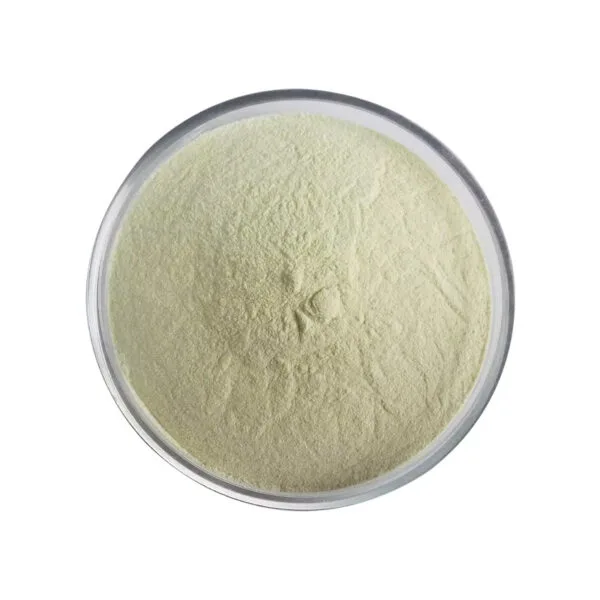
Xanthan gum is a fermentation-derived polysaccharide commonly used to control viscosity, flow behavior and suspension.
Its rheological characteristics make it particularly useful in systems that need to remain stable while stationary but still flow efficiently when pumped or mixed.
Haofang Chemicals also supplies Xanthan Gum for drilling fluids, coatings, detergents and other industrial formulations.
Shear-Thinning Behavior
Shear thinning means that the apparent viscosity of a fluid decreases as shear increases.
In simple terms, a xanthan-containing fluid can remain relatively thick when standing still but become easier to move when pumped, stirred or sprayed.
Low-Shear Viscosity
Low-shear viscosity describes how a fluid behaves when very little mechanical force is applied.
High low-shear viscosity can help keep solid particles suspended during storage or during periods when circulation stops.
Suspension Stability
Suspension stability refers to how well a formulation prevents solid particles from settling.
This property is particularly important in drilling fluids, coatings and other formulations containing dispersed solids.
Guar Gum Versus Xanthan Gum Comparison
The following table provides a simple overview for industrial buyers.
| Comparison Factor | Guar Gum | Xanthan Gum |
|---|---|---|
| Source | Guar seed | Microbial fermentation |
| Main Function | Thickening, water retention, gel formation | Rheology control, thickening, suspension |
| Viscosity Development | Strong | Strong |
| Low-Shear Viscosity | Good | Excellent in many systems |
| Shear-Thinning Behavior | Moderate to strong depending on system | Strong |
| Suspension Performance | Good | Very good |
| Salt Tolerance | Depends on grade and formulation | Often preferred in saline systems |
| Fracturing Fluids | Commonly used | Less common as primary polymer |
| Drilling Fluids | Used in selected systems | Widely used |
| Construction Materials | Common | Application dependent |
| Coatings | Possible | Common for rheology control |
| Detergents | Possible | Common |
| Main Buyer Concern | Hydration and gel performance | Rheology and suspension |
This comparison should be treated as a selection guide rather than a fixed rule.
Actual performance depends on polymer grade, concentration, water chemistry, temperature, pH and the other ingredients used in the formulation.
Guar Gum Versus Xanthan Gum for Viscosity
One of the most common questions buyers ask is:
“Which gives more viscosity, guar gum or xanthan gum?”
The answer depends on how viscosity is measured and what type of flow behavior is required.
Guar Gum for Strong Bulk Viscosity
Guar gum is widely valued for its ability to rapidly build viscosity in water.
This can be useful in applications where the primary objective is straightforward thickening or water retention.
Hydration Speed
Hydration speed describes how quickly the polymer absorbs water and develops viscosity.
For production efficiency, fast and consistent hydration can reduce mixing time and help improve batch repeatability.
Xanthan Gum for Controlled Rheology
Xanthan gum is particularly useful when a formulation needs more than a high viscosity reading.
Its value often comes from maintaining suspension at low shear while allowing easier flow during pumping or processing.
Rheology
Rheology is the study of how a material flows and deforms.
For industrial formulations, rheology is often more important than a single viscosity value because the product must behave properly under multiple processing conditions.
Which Is Better for Drilling Fluids?
When comparing guar gum versus xanthan gum for drilling fluids, xanthan gum is often the more common choice for rheology control.
Water-based drilling fluids need to circulate efficiently while also transporting cuttings and keeping solids suspended.
Xanthan Gum in Drilling Fluids
Xanthan gum is widely used as a viscosifier and suspension agent in water-based drilling muds.
Its shear-thinning characteristics allow the fluid to remain sufficiently viscous at low shear while flowing more easily under higher shear during circulation.
The SLB Oilfield Glossary describes xanthan polymer as a common material used to provide non-Newtonian rheology in drilling-fluid systems.
Cuttings Transport
Cuttings transport describes the ability of drilling fluid to carry drilled rock particles from the bottom of the well toward the surface.
A fluid with appropriate low-shear viscosity can help support this process.
Hole Cleaning
Hole cleaning refers to removing drilled solids efficiently from the wellbore.
Good rheology can help reduce settling and improve the transport of solids during drilling operations.
Guar Gum in Drilling Applications
Guar gum may also be used in oilfield fluid systems, depending on the required formulation.
However, its most recognized oilfield role is generally associated with fracturing fluids rather than standard water-based drilling mud rheology.
Guar Gum Versus Xanthan Gum for Fracturing Fluids
For hydraulic fracturing, guar gum is often the more relevant starting material.
Fracturing fluids may need enough viscosity and gel strength to transport proppant deep into newly created fractures.
Guar Gum for Proppant Transport
Guar gum and guar derivatives can be used to create viscous or crosslinked fluid systems.
These systems can provide the carrying capacity required to transport proppant.
According to the SLB Oilfield Glossary, guar is a hydrophilic polysaccharide widely associated with oilfield fluid systems.
Proppant
Proppant is a solid material introduced into fractures to help keep them open.
The fracturing fluid must be able to carry these particles effectively during pumping.
Crosslinking
Crosslinking creates connections between polymer chains and can significantly increase gel strength.
This is one reason guar-based systems are important in many fracturing-fluid formulations.
Which Is Better in Salt Water?
Another common buyer question is:
“Is xanthan gum better than guar gum in salt water?”
In many industrial and oilfield systems, xanthan gum is considered attractive where salinity is high.
Xanthan Gum and Salinity
Xanthan gum can perform well in a range of water-based environments, including formulations containing dissolved salts.
This makes it useful in drilling and other industrial systems where freshwater is not always available.
Guar Gum in Brine Systems
Guar can also be used in brines, but performance can vary depending on polymer grade and formulation chemistry.
For this reason, buyers should test the material in water that closely matches actual operating conditions.
Salinity
Salinity refers to the concentration of dissolved salts in water.
Salt concentration can change polymer hydration, viscosity and overall fluid behavior.
Water Hardness
Water hardness mainly refers to dissolved calcium and magnesium ions.
Hard water can affect the performance of certain polymers and should be considered during laboratory testing.
Guar Gum Versus Xanthan Gum for Suspension
Suspension performance is another important factor in the guar gum versus xanthan gum decision.
A formulation containing solid particles needs sufficient structure to prevent rapid settling.
Guar Gum Suspension Performance
Guar gum increases the viscosity of the continuous liquid phase.
This higher viscosity can help slow the settling of dispersed solids.
Xanthan Gum Suspension Performance
Xanthan gum is particularly valuable when strong low-shear suspension is required.
This makes it useful in drilling fluids, coatings and other formulations where solids must remain distributed even when the product is not moving.
Static Suspension
Static suspension refers to the ability to hold particles while the system is at rest.
This can help prevent hard sediment from forming during storage.
Dynamic Suspension
Dynamic suspension refers to particle stability while the fluid is moving.
A well-designed rheology system needs to balance suspension with acceptable pumping resistance.
Guar Gum Versus Xanthan Gum for Coatings and Detergents
Xanthan gum is frequently selected for coatings and detergent systems because of its rheological properties.
However, final selection depends on compatibility with the entire formulation.
Xanthan Gum in Coatings
Coatings often contain pigments and fillers that can settle during storage.
Xanthan gum can help improve suspension while maintaining workable application viscosity.
Sag Resistance
Sag resistance refers to the ability of a coating to remain in place after application rather than flowing downward.
Rheology modifiers can help balance application flow and sag control.
Xanthan Gum in Detergents
Liquid detergents may require both viscosity and long-term stability.
Xanthan gum can help improve body, suspension and product consistency in suitable formulations.
Which Is Cheaper: Guar Gum or Xanthan Gum?

Price is important, but it should not be the only comparison point.
The cheapest raw material per kilogram may not create the lowest-cost finished formulation.
Raw Material Price
Guar gum and xanthan gum prices can change based on grade, raw material supply, specification, order quantity and international market conditions.
For serious B2B sourcing, quotations should always be compared using equivalent product specifications.
Dosage Cost
Dosage cost refers to how much polymer is required to achieve the target result.
A more expensive polymer may still be economical if a smaller dosage is needed.
Cost-in-Use
Cost-in-use means the actual material cost required to produce the desired final performance.
For industrial buyers, this is often more useful than simply comparing price per ton.
How Should Industrial Buyers Compare Guar Gum and Xanthan Gum?
Before choosing between guar gum versus xanthan gum, procurement teams should define the required performance clearly.
Compare Viscosity Specifications
Always confirm how viscosity is tested.
The polymer concentration, test temperature, water quality, spindle and rotational speed can all change the measured result.
Compare Moisture Content
Moisture content affects product consistency and effective polymer concentration.
Lower and more stable moisture levels can help improve batch consistency.
Compare Particle Size
Particle size can influence dispersion speed and hydration behavior.
Very fine powders may hydrate quickly but can also be more difficult to disperse without proper mixing.
Compare pH Compatibility
Industrial formulations may operate under acidic, neutral or alkaline conditions.
The selected polymer should maintain sufficient performance within the intended pH range.
Batch Consistency
For large industrial buyers, consistent batches are essential.
A polymer that performs well once but varies significantly from shipment to shipment can create production problems.
Can Guar Gum and Xanthan Gum Be Used Together?
A common Google-style question is:
“Can I mix guar gum and xanthan gum together?”
Yes, in some formulations the two polymers can be combined.
However, there is no universal blending ratio.
Polymer Synergy
Polymer synergy occurs when two polymers interact and create performance that differs from either polymer alone.
This can sometimes improve viscosity, texture or suspension.
Formulation Testing
Any blend should be evaluated under the actual production conditions.
Salt concentration, pH, temperature, order of addition and mixing shear can all influence the final result.
Do Not Assume 50:50 Is Best
A simple equal-ratio blend is not necessarily optimal.
Industrial formulators should test several ratios and compare viscosity, flow, stability and total cost.
How to Choose Between Guar Gum and Xanthan Gum
A practical way to make the decision is to start with the application.
Choose Guar Gum When You Need
- Strong water thickening
- Water retention
- Gel formation
- Fracturing-fluid applications
- Construction thickening
- Industrial slurry viscosity
- Crosslinkable polymer systems
Buyers can review Haofang Chemicals’ Guar Gum for more information about available industrial applications.
Choose Xanthan Gum When You Need
- Strong low-shear viscosity
- Shear-thinning flow
- Suspension stability
- Water-based drilling-fluid rheology
- Salt-tolerant formulations
- Coating rheology control
- Detergent stabilization
For these applications, Haofang Chemicals’ Xanthan Gum provides another option for industrial formulation development.
Consider a Blend When You Need
- Multiple rheological functions
- Improved suspension plus bulk viscosity
- A customized flow profile
- Better balance between performance and dosage cost
The final decision should always be supported by laboratory testing.
B2B Buying Checklist for Guar Gum and Xanthan Gum
For industrial buyers, giving the supplier detailed application information can greatly improve product selection.
1. Define Your Application
Tell the supplier exactly where the polymer will be used.
Examples include drilling fluid, fracturing fluid, detergent, coating, construction material or industrial slurry.
2. Specify Target Viscosity
Provide the required viscosity together with the test method whenever possible.
This helps suppliers recommend a more appropriate grade.
3. Provide Operating Conditions
Important information may include:
- pH
- Water salinity
- Temperature
- Water hardness
- Mixing equipment
- Other formulation chemicals
4. Request Technical Documents
Typical procurement documents may include:
- TDS
- SDS
- COA
- Product specification
- Packing information
5. Test a Sample
Sample testing is one of the most reliable steps before bulk purchasing.
The material should be evaluated using the buyer’s own water, formulation and production conditions.
6. Calculate Total Formulation Cost
Compare the amount of polymer required per batch rather than simply comparing quotations per kilogram.
This provides a more realistic understanding of commercial performance.
FAQ About Guar Gum Versus Xanthan Gum
Is guar gum the same as xanthan gum?
No.
Guar gum comes from guar seeds, while xanthan gum is produced through microbial fermentation. They can both thicken water-based systems, but their rheological behavior is different.
Which is better, guar gum or xanthan gum?
There is no universal answer.
Guar gum can be better for strong thickening, water retention and gel-forming applications, while xanthan gum is often preferred for shear-thinning rheology and suspension stability.
Which is better for drilling fluid?
Xanthan gum is commonly selected for water-based drilling fluids because it provides useful low-shear viscosity and shear-thinning behavior.
These characteristics support suspension and cuttings transport.
Which is better for hydraulic fracturing?
Guar gum and guar derivatives are widely used in hydraulic-fracturing fluid systems.
They can be crosslinked to create stronger gels capable of carrying proppant.
Does xanthan gum work in salt water?
Xanthan gum can perform effectively in many saline systems.
However, buyers should always test the exact grade under the required salt concentration and temperature.
Can guar gum be used in brine?
Yes, guar gum can be used in certain brine systems.
Final performance depends on water chemistry, polymer treatment and formulation conditions.
Which one provides better suspension?
Xanthan gum is often attractive where strong low-shear suspension is required.
Guar gum can also improve suspension by increasing bulk viscosity.
Which one is cheaper?
Price varies depending on product grade, market conditions and quantity.
The better question is which product provides the lowest cost per finished batch at the required performance level.
Can guar gum and xanthan gum be mixed?
Yes, they can be combined in certain formulations.
The best ratio should be determined through laboratory testing rather than using a fixed universal formula.
Why is my guar gum not reaching the expected viscosity?
Common causes include incomplete hydration, poor dispersion, unsuitable water chemistry, incorrect temperature, wrong dosage or differences in testing methods.
Why does xanthan gum flow more easily when pumped?
This is caused by shear-thinning behavior.
The fluid becomes less viscous under higher shear, making pumping or mixing easier while still providing strong structure at low shear.
What information should I send when requesting a quote?
Industrial buyers should provide:
- Application
- Required viscosity
- Monthly or annual quantity
- Destination
- Packaging requirement
- pH
- Temperature
- Salinity
- Required technical standard
Providing these details can help the supplier recommend a more suitable grade.
Conclusion
The guar gum versus xanthan gum comparison should not be reduced to a simple question of which powder is stronger or cheaper.
Guar gum is particularly useful where strong thickening, water retention, gel formation and fracturing-fluid performance are required. Xanthan gum is often more attractive where formulations need shear-thinning rheology, low-shear suspension, salt tolerance and controlled flow behavior.
For industrial buyers, the best purchasing decision comes from comparing actual application performance.
Before placing a bulk order, evaluate viscosity, dispersion, suspension, salinity resistance, temperature stability and dosage under real formulation conditions.
Haofang Chemicals provides both Guar Gum and Xanthan Gum for industrial applications. Buyers can also contact Haofang Chemicals to discuss application requirements, specifications, samples and bulk quotations.
For additional technical references, buyers can review the SLB Oilfield Glossary for oilfield polymer and drilling-fluid terminology, as well as the U.S. FDA when researching regulatory information related to food-grade applications.