Shijiazhuang Haofang New Material Technology Co., Ltd. is a trusted manufacturer and exporter of chemical raw materials with over 20 years of industry experience. We supply HPMC, CMC, PAC, Sodium Formate, SLES 70%, Calcium Formate, and other industrial chemicals to customers worldwide.
For more industry insights, product updates, and application guides, follow us on:
Facebook: https://www.facebook.com/profile.php?id=61583148969186
YouTube: https://www.youtube.com/@HAOFANGChemicalIndustry
Thank you for your support, and we look forward to helping your business grow with reliable chemical solutions.
Table of Contents
Key Takeaways
- Adhesives PVA grades should be selected according to hydrolysis degree, solution viscosity, molecular weight, particle size and dissolution conditions.
- Partially hydrolyzed PVA generally dissolves more easily and is widely used in paper, packaging, remoistenable adhesives and emulsion polymerization.
- Fully hydrolyzed PVA normally provides stronger film integrity and better water resistance but may require higher dissolution temperatures.
- Low-viscosity grades are easier to pump and can support higher-solids formulations.
- High-viscosity grades provide stronger thickening, cohesive strength and film formation but require more careful solution preparation.
- Common grade names such as 1788, 2088 and 2488 are useful market references, but buyers should always confirm the actual technical specification.
- The lowest-priced grade is not always the most economical because dosage, cooking time, production speed and bonding performance affect total cost.
- Sample testing under real manufacturing conditions is essential before placing a bulk order.
What Does Adhesives PVA Mean?
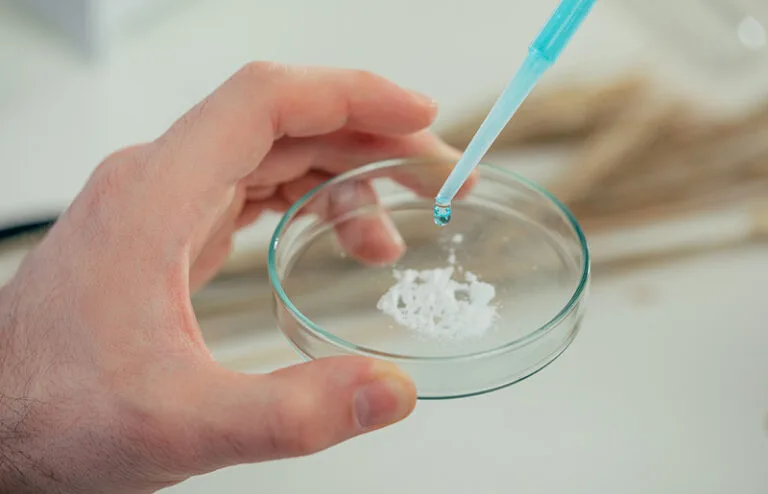
The phrase adhesives PVA is commonly used by buyers looking for polyvinyl alcohol raw materials, PVA-based adhesive formulations or polyvinyl acetate white glue. However, these materials are related but not identical.
In this guide, adhesives PVA mainly refers to polyvinyl alcohol, also known as PVOH, used as a binder, film-forming polymer, viscosity modifier or protective colloid in industrial adhesive production.
Haofang Chemicals supplies Polyvinyl Alcohol in flake, granular and powder forms. Its listed specification range includes alcoholysis degrees of approximately 87–89% and 98–99%, along with solution viscosities from about 5 to 60 mPa·s.
Polyvinyl Alcohol
Polyvinyl alcohol is a water-soluble synthetic polymer with strong film-forming and adhesive properties.
It can function as the main binder in selected water-based adhesives or as a functional ingredient used to improve viscosity, cohesive strength, film quality and emulsion stability.
Polyvinyl Acetate
Polyvinyl acetate, usually abbreviated as PVAc, is widely associated with white glue and wood glue emulsions.
PVOH is frequently used as a protective colloid during the production of PVAc and VAE emulsions, helping control emulsion stability, particle size and adhesive performance.
Why the Difference Matters
A buyer asking for “PVA glue” may be requesting a finished PVAc emulsion, while another buyer using the term adhesives PVA may need dry polyvinyl alcohol powder.
To avoid purchasing errors, quotation requests should clearly identify whether the required material is PVOH powder, a prepared PVOH solution or a finished PVAc adhesive.
Why Adhesives PVA Grade Selection Matters
Not every PVA grade performs the same way.
Different grades can produce different solution viscosities, dissolution temperatures, film strengths, wet tack, water sensitivity and processing behavior. Choosing only by product name or price can lead to poor bonding, long cooking times, unstable viscosity or production-line problems.
Bonding Performance
Bonding performance describes how effectively the adhesive connects two surfaces.
The final result depends on the PVA grade, substrate porosity, adhesive solids, coating weight, drying conditions and pressure applied during bonding.
Cohesive Strength
Cohesive strength is the internal strength of the dried adhesive film.
Higher-molecular-weight and higher-viscosity PVA grades often provide stronger film integrity, although they can also make the adhesive more difficult to pump or coat.
Wet Tack
Wet tack is the initial holding ability of an adhesive before it fully dries.
Fast wet tack is important in high-speed carton sealing, paper tube winding, laminating and other production lines where bonded materials must remain in position immediately.
Open Time
Open time is the period during which the applied adhesive remains workable.
A very short open time may cause premature drying, while an excessively long open time can reduce production speed.
How Are Adhesives PVA Grades Classified?
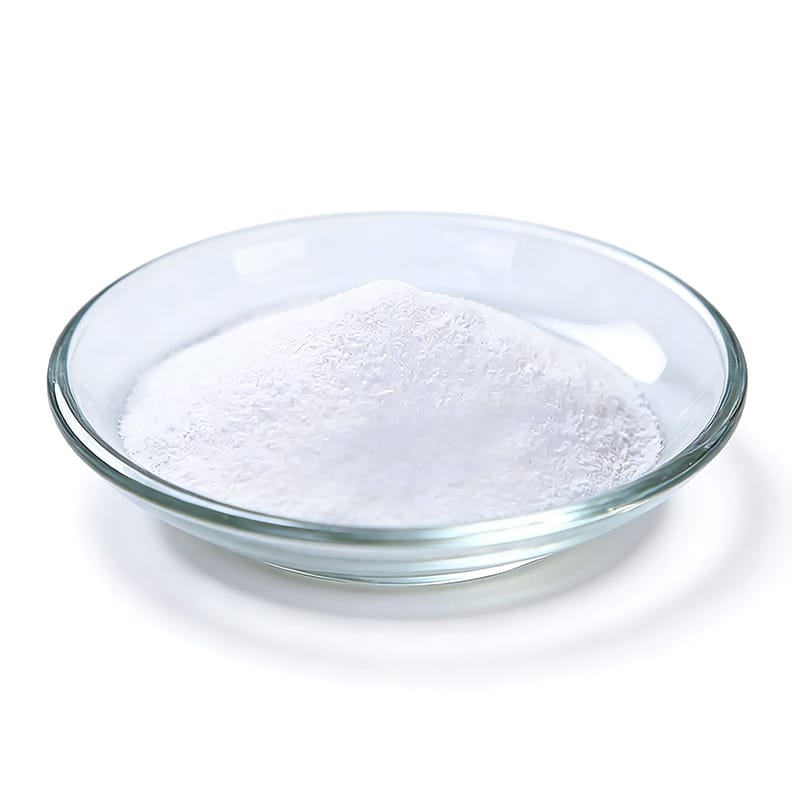
The two most important grade-selection variables are hydrolysis degree and viscosity.
Particle size, powder form, ash content, residual acetate level and solution-preparation behavior may also influence industrial performance.
Degree of Hydrolysis
Polyvinyl alcohol is manufactured by hydrolyzing polyvinyl acetate.
The degree of hydrolysis indicates how much of the original acetate structure has been converted into alcohol groups. This property influences water solubility, dissolution temperature, surface tension, moisture sensitivity and final film performance.
Partially Hydrolyzed PVA
Partially hydrolyzed grades commonly fall near an 87–89% hydrolysis range.
They generally dissolve more easily, provide good flexibility and are widely used in remoistenable adhesives, PVAc emulsions, paper adhesives and general industrial bonding systems.
Intermediately Hydrolyzed PVA
Intermediate grades sit between partially and fully hydrolyzed materials.
They can provide a balance between water solubility, film strength, emulsion stability and moisture resistance.
Fully Hydrolyzed PVA
Fully hydrolyzed grades generally have a hydrolysis degree near 98–99%.
They normally provide improved water resistance and stronger film properties but frequently require hotter water and more controlled cooking conditions for complete dissolution.
Solution Viscosity
Viscosity is often used as an indirect indicator of the molecular weight of a PVA grade.
Higher-viscosity grades typically provide more thickening, stronger films and improved cohesive strength. Lower-viscosity grades are generally easier to dissolve, pump, filter and apply at higher solids.
Low-Viscosity Grade
A low-viscosity grade creates a more fluid solution at a given concentration.
It is useful when the adhesive must penetrate porous substrates, run through fine nozzles or maintain a relatively high solids content without becoming difficult to pump.
Medium-Viscosity Grade
A medium-viscosity grade provides a practical balance between processing and bonding performance.
It is often considered for general paper converting, packaging, laminating and standard adhesive formulations.
High-Viscosity Grade
A high-viscosity grade develops greater solution body and film strength.
It can be valuable in tube winding, board laminating, construction binders and stronger industrial bonding systems, although more mixing energy may be required.
Particle Size
Particle size affects how quickly the polymer wets, disperses and dissolves.
Fine particles can shorten dissolution time but may produce more dust or form lumps when added too quickly. Coarser particles are often easier to handle but may require longer cooking.
Adhesives PVA Grade Comparison Table
The table below provides a general selection framework. Exact values and application performance should always be confirmed through the supplier’s technical data sheet and customer testing.
| Grade Profile | Typical Hydrolysis | Relative Viscosity | Dissolution Behavior | Suitable Applications | Main Buying Concern |
|---|---|---|---|---|---|
| Low-viscosity partial | 87–89% | Low | Easier dissolution and handling | Paper adhesive, labels, emulsion polymerization | May provide lower film strength |
| Medium-viscosity partial | 87–89% | Medium | Moderate preparation requirements | Packaging, paper tubes, general bonding | Balance of tack and processability |
| High-viscosity partial | 87–89% | High | Slower and more shear-sensitive preparation | Board laminating, tube winding, stronger binders | Pumping and coating viscosity |
| Low-viscosity full | 98–99% | Low | Usually needs higher temperature | Specialty paper, moisture-resistant systems | Correct cooking temperature |
| Medium-viscosity full | 98–99% | Medium | Controlled hot-water dissolution | Wood, paperboard, industrial films | Gel formation during cooling |
| High-viscosity full | 98–99% | High | Most demanding solution preparation | High-strength adhesive and binder systems | Mixing energy and solution stability |
| Fine-particle grade | Varies | Varies | Faster dispersion when added correctly | Dry blending and rapid solution preparation | Dust and lump prevention |
| Tackified or modified grade | Varies | Formulation-specific | Supplier-specific | High-speed tube winding and laminating | Compatibility and shelf stability |
This table is a starting point rather than a universal formula. Adhesive performance also depends on plasticizers, fillers, crosslinkers, defoamers, preservatives and the substrate being bonded.
Understanding Common Adhesives PVA Grade Numbers
Many international buyers encounter grade names such as 0588, 1788, 2088, 2488 and 2688.
These names are widely used in parts of the Asian PVA supply market, but they should not be treated as globally standardized specifications. Different manufacturers may use different naming systems, test conditions or viscosity tolerances.
PVA 0588
PVA 0588 is generally associated with relatively low viscosity and partial hydrolysis.
It may be considered where rapid dissolution, easy pumping and lower solution viscosity are more important than maximum film strength.
Typical Uses
Possible applications include paper treatment, emulsion polymerization, light-duty adhesive formulations and coatings.
The actual suitability depends on the supplier’s viscosity range, particle size and hydrolysis specification.
PVA 1788
PVA 1788 is often used as a general-purpose partially hydrolyzed grade.
It is commonly considered for paper adhesives, packaging, textile sizing, white glue formulations and emulsion stabilization because it offers a practical balance of solubility and bonding performance.
Why Buyers Choose It
The grade can provide useful viscosity without creating the more difficult processing requirements associated with very high-viscosity materials.
It is frequently shortlisted when buyers need a flexible and economical starting grade for industrial adhesive trials.
PVA 2088
PVA 2088 normally represents a medium-viscosity, partially hydrolyzed profile.
Compared with lower-viscosity grades, it can provide stronger film formation and greater adhesive body while remaining manageable in many production systems.
Typical Applications
It may be evaluated for premium paper adhesives, tube winding, laminating, textile applications and stronger general-purpose bonding.
Buyers should compare its wet tack, dried film strength and solution-preparation time against the intended production speed.
PVA 2488
PVA 2488 is widely associated with higher viscosity and partial hydrolysis.
It can provide strong thickening, cohesive strength, film formation and water retention, making it relevant to heavy paper converting, construction additives, textile sizing and high-strength binder systems.
Processing Consideration
A higher-viscosity grade can become difficult to dissolve or pump at excessive concentrations.
The adhesive manufacturer may need to adjust solution solids, heating rate, agitation speed and addition sequence.
PVA 2688
PVA 2688 is generally considered a very high-viscosity profile.
It may be selected where maximum thickening and film integrity are required, but it usually creates greater demands on mixing equipment and process control.
Is Higher Always Better?
No.
A very high-viscosity grade can slow solution preparation, reduce pump efficiency and make coating-weight control more difficult. Buyers should select the lowest viscosity that still achieves the required bonding and film performance.
Partially Hydrolyzed vs Fully Hydrolyzed Adhesives PVA
Hydrolysis degree is one of the most important comparisons in an adhesives PVA grade guide.
Neither type is universally better. Each offers different advantages.
| Selection Factor | Partially Hydrolyzed PVA | Fully Hydrolyzed PVA |
| Typical hydrolysis range | About 87–89% | About 98–99% |
| Water dissolution | Generally easier | Usually requires more heat |
| Cold-water solubility | Better | Lower |
| Film flexibility | Generally good | Stronger and more crystalline film |
| Water resistance | Lower without modification | Generally improved |
| Adhesion to less-polar surfaces | Often better | Application dependent |
| Remoistenable adhesive | Common choice | Less common |
| Moisture-resistant film | Limited without modification | More suitable |
| PVAc emulsion stabilization | Widely used | Grade dependent |
| Processing demand | Lower | Higher |
Kuraray identifies partially hydrolyzed PVOH as useful in remoistenable adhesives and as an emulsifier for PVAc and EVA emulsions. Fully and highly hydrolyzed grades are associated with improved water resistance and more demanding adhesive and film applications.
Choose Partially Hydrolyzed PVA When
- Easier dissolution is important
- The production plant has limited cooking capacity
- Flexible films are required
- The adhesive is designed to be remoistenable
- PVA is used as a protective colloid in PVAc or VAE emulsions
- Strong adhesion to paper and other porous materials is required
Choose Fully Hydrolyzed PVA When
- Improved moisture resistance is required
- Strong film integrity is a priority
- The adhesive plant can provide controlled hot-water dissolution
- The formulation is used in specialty paper or industrial binder systems
- Lower residual acetate content is required
Low-Viscosity vs High-Viscosity Adhesives PVA
Viscosity should be selected according to both the required bond and the production equipment.
A grade that performs well in a laboratory beaker may create major problems in a full-scale tank, pump, filter or coating head.
Advantages of Low-Viscosity Grades
Low-viscosity materials allow adhesive manufacturers to prepare higher-solids solutions with manageable flow.
They are also easier to transfer through pumps and pipes and may penetrate porous paper or wood more effectively.
Potential Limitation
The dried film may have lower cohesive strength than a higher-molecular-weight grade.
Additional formulation adjustments may be needed when the bonded product must withstand heavier loads.
Advantages of High-Viscosity Grades
High-viscosity materials provide stronger thickening and can create tougher adhesive films.
They may help reduce penetration into porous substrates and improve the body of an industrial adhesive.
Potential Limitation
Excessive viscosity can create poor mixing, unstable coating weight, blocked filters and slower production.
The total polymer concentration may need to be reduced to maintain practical processing behavior.
Adhesives PVA Grade Selection by Application
The most reliable selection method begins with the end use rather than with a preferred grade number.
Adhesives PVA for Paper and Packaging
Paper and packaging adhesives need good wet tack, controlled penetration and rapid drying.
Partially hydrolyzed, low- to medium-viscosity grades are often practical starting points because they combine manageable solution preparation with reliable bonding to porous substrates.
Carton Sealing
Carton-sealing adhesives must establish a bond quickly on high-speed lines.
The chosen grade should provide sufficient initial tack without drying on the application roller or nozzle.
Paper Bags
Paper-bag adhesives require controlled penetration and flexible bonds.
An adhesive that penetrates too deeply may reduce bond-line strength, while one that remains completely on the surface may not develop enough anchorage.
Paper Tube Winding
Tube-winding systems often benefit from medium- or high-viscosity grades with strong wet tack and cohesive strength.
The adhesive must hold multiple paper layers while the tube moves through continuous production equipment.
Adhesives PVA for Wood Bonding
PVA is widely used in water-based wood and furniture adhesive systems.
The appropriate grade depends on wood species, moisture content, press time, adhesive spread rate and required water-resistance classification.
Indoor Furniture
General interior furniture may use standard water-based adhesive formulations.
A balanced partially hydrolyzed grade can provide adequate bonding and processability for dry indoor use.
Moisture-Resistant Wood Products
Applications exposed to humidity require more than a basic PVA raw material.
A fully hydrolyzed, modified or crosslinked system may be needed to improve moisture resistance and reduce bond weakening.
For further information about adhesive failure and mechanical testing, buyers can review Haofang’s related guide on Adhesives PVA Adhesives Strength Test.
Adhesives PVA for PVAc Emulsion Polymerization
PVOH can act as a protective colloid during the manufacture of PVAc and VAE emulsions.
It helps stabilize polymer particles and can influence particle size, viscosity, film formation and final adhesive behavior.
Protective Colloid
A protective colloid helps keep dispersed polymer particles stable within a water-based emulsion.
The PVA hydrolysis degree and molecular weight can affect emulsion viscosity and polymerization stability.
Emulsion Stability
Stable emulsions resist separation, coagulation and excessive viscosity changes during storage.
The best PVA grade must be evaluated with the actual monomer system, initiator, surfactant and solids target.
Adhesives PVA for Remoistenable Labels
Remoistenable adhesives become tacky again after contact with water.
Partially hydrolyzed grades are commonly considered because of their water solubility and ability to form functional films.
Typical Products
Applications may include envelope gums, labels, stamps and paper tapes.
The formulation must balance dry-film blocking resistance with rapid reactivation after wetting.
Adhesives PVA for Construction Products
PVA may be used in construction binders, mortar modification and selected tile-adhesive systems.
Its film formation and bonding properties can contribute to adhesion, flexibility and surface performance.
PVA vs Redispersible Polymer Powder
PVA and redispersible polymer powder do not perform the same role in every mortar formulation.
Haofang’s Redispersible Latex Powder is an ethylene-vinyl acetate-based powder specifically positioned to improve bonding, flexibility, abrasion resistance and water resistance in dry-mix mortar.
For many cementitious systems, PVA may function as a supporting binder or processing additive, while redispersible powder provides broader polymer modification.
How Dissolution Affects Adhesives PVA Performance
A suitable grade can still fail if it is not dissolved correctly.
Incomplete dissolution produces undissolved particles, unstable viscosity, clogged filters and inconsistent adhesive strength.
Water Addition
PVA should be dispersed evenly rather than dumped into a small area of the tank.
Rapid addition can create lumps with hydrated outer surfaces and dry polymer trapped inside.
Heating
The required temperature depends strongly on hydrolysis degree and particle size.
Partially hydrolyzed grades usually dissolve more easily, while fully hydrolyzed materials often need higher temperatures for complete solution preparation.
Agitation
Agitation should be strong enough to distribute the powder without drawing excessive air into the solution.
Poor mixing causes lumps, while excessive vortexing can introduce foam.
Cooling Stage
Some PVA solutions increase in viscosity as they cool.
The production team should evaluate viscosity at the actual coating or application temperature rather than relying only on the hot solution reading.
What Specifications Should Buyers Request?
A professional adhesives PVA quotation should include more than the grade name.
Haofang’s PVA product range lists selectable alcoholysis degrees, viscosity levels and powder forms, with 20 kg or 25 kg kraft-paper packaging options.
Alcoholysis Degree
Ask for the minimum, maximum and test method.
A product described only as “88 grade” may still have a specification range that affects solubility and adhesive performance.
Viscosity
Confirm the solution concentration, test temperature and measurement method.
A viscosity value without test conditions cannot be compared accurately between suppliers.
Volatile or Moisture Content
Moisture affects the effective amount of polymer in each bag.
Large variations may cause inconsistent adhesive solids and batch viscosity.
Ash Content
Ash represents inorganic residue within the polymer.
Low and consistent ash can be important in specialty films, paper coatings and sensitive adhesive formulations.
Particle Size
Particle-size distribution affects dust, wetting, dispersion and cooking time.
Buyers should select a form compatible with their tank size, mixer design and feeding method.
pH
Solution pH can influence compatibility with preservatives, crosslinkers, emulsions and other ingredients.
The acceptable range should be defined according to the complete adhesive formulation.
Required Documents
Industrial buyers may request:
- Technical Data Sheet
- Safety Data Sheet
- Certificate of Analysis
- Packing specification
- Shelf-life information
- Country-of-origin documentation
- Export and customs documents
Adhesives PVA Supplier Comparison Checklist
A technically suitable grade is only part of the purchasing decision.
Supply reliability, batch consistency and technical communication also influence production risk.
| Supplier Evaluation Item | What to Check | Why It Matters |
| Grade consistency | Viscosity and hydrolysis range by batch | Prevents formulation changes |
| Sample availability | Representative pre-shipment sample | Supports laboratory approval |
| Test method | Concentration and measurement conditions | Enables fair comparison |
| Production capacity | Monthly output and lead time | Reduces supply interruptions |
| Packaging | Bag weight and moisture barrier | Protects product during shipping |
| Customization | Viscosity, particle size and packing options | Improves application matching |
| Documentation | COA, TDS, SDS and export documents | Supports quality and customs review |
| Technical response | Ability to discuss application conditions | Reduces grade-selection errors |
| Logistics experience | Export markets and loading options | Improves delivery reliability |
Haofang Chemicals states that it supplies industrial chemical raw materials to more than 30 countries and supports specification customization, quality control and export services.
How to Calculate the Real Cost of Adhesives PVA
The cheapest price per ton does not necessarily produce the lowest adhesive cost.
Buyers should calculate the cost required to achieve the target viscosity, coating speed and bond performance.
Dosage Cost
A higher-performing grade may require a lower dosage.
Compare the polymer cost per ton of finished adhesive rather than only the price of one bag.
Energy Cost
Fully hydrolyzed or high-viscosity grades may require longer heating and mixing.
Additional steam, electricity and production time should be included in the cost calculation.
Production Efficiency
A grade that dissolves consistently can reduce filter blockage, rejected batches and operator intervention.
These savings may be more valuable than a small raw-material price difference.
Failure Cost
Weak bonds can lead to opened cartons, delamination, customer complaints and returned products.
The total cost of adhesive failure is usually much greater than the difference between two PVA quotations.
A Practical Adhesives PVA Selection Process
A structured selection process helps buyers avoid choosing by grade number alone.
Step 1: Define the Substrate
Identify whether the adhesive will bond paper, paperboard, wood, textile, leather, ceramic or another material.
Porosity and surface chemistry affect penetration and adhesion.
Step 2: Define the Environment
Determine whether the final bond will be used in dry indoor conditions, high humidity, direct water contact, heat or freezing temperatures.
This information helps determine the required hydrolysis level and modification system.
Step 3: Define the Production Method
Provide tank capacity, heating capability, mixer type, application method and production speed.
A technically strong grade may be unsuitable if the plant cannot dissolve or apply it efficiently.
Step 4: Shortlist Grades
Compare partially and fully hydrolyzed options across low, medium and high viscosity ranges.
Do not shortlist solely from familiar names such as 1788 or 2488.
Step 5: Prepare Laboratory Solutions
Use consistent water quality, polymer concentration, heating profile and mixing time.
Record the final solution viscosity after cooling.
Step 6: Run Application Tests
Test wet tack, open time, drying speed, peel strength, shear strength and water resistance.
The evaluation should use the actual substrate and production conditions.
Step 7: Calculate Cost-in-Use
Compare dosage, energy consumption, processing time and failure risk.
Select the grade that delivers the best total production value.
FAQ About Adhesives PVA Grades
What is the best adhesives PVA grade?
There is no single best grade for every adhesive.
The correct choice depends on the substrate, required viscosity, drying speed, moisture exposure, production equipment and target bond strength.
Is PVA 1788 good for adhesives?
PVA 1788 is often considered a practical general-purpose grade for paper, packaging, white glue and emulsion applications.
However, buyers should confirm the supplier’s actual hydrolysis, viscosity and particle-size specifications before use.
What is the difference between PVA 1788 and PVA 2488?
Both are commonly supplied as partially hydrolyzed grades, but PVA 2488 normally has much higher solution viscosity.
PVA 1788 is generally easier to process, while PVA 2488 can provide stronger thickening and film integrity.
Should I choose PVA 2488 for stronger glue?
Not automatically.
Higher viscosity may improve cohesive strength, but it can also make the adhesive difficult to dissolve, pump and coat. Application testing is necessary.
Which adhesives PVA grade dissolves fastest?
Low-viscosity, partially hydrolyzed and fine-particle grades usually dissolve more easily.
Actual dissolution speed also depends on water temperature, powder addition rate and agitation.
Which PVA grade is better for paper adhesive?
A partially hydrolyzed, low- or medium-viscosity grade is often a useful starting point.
The final selection depends on paper porosity, machine speed, drying conditions and required wet tack.
Which PVA grade is better for paper tube winding?
Medium- to high-viscosity grades may provide stronger wet tack and cohesive strength.
The solution must still remain pumpable and compatible with the production line.
Is fully hydrolyzed PVA waterproof?
Fully hydrolyzed PVA generally offers better water resistance than partially hydrolyzed PVA, but it should not automatically be described as waterproof.
Long-term water resistance may require crosslinking, modification or another polymer system.
Can partially hydrolyzed PVA be used in PVAc emulsions?
Yes.
Partially hydrolyzed PVOH is widely used as a protective colloid in PVAc and VAE emulsion polymerization.
Why does my PVA solution contain lumps?
Common causes include adding powder too quickly, insufficient agitation, unsuitable water temperature or poor dispersion before heating.
A slower and more uniform feeding process can help prevent dry polymer from becoming trapped inside hydrated lumps.
Why is my adhesives PVA viscosity inconsistent?
Possible causes include water-quality variation, incomplete dissolution, incorrect polymer concentration, temperature differences and batch-to-batch grade variation.
The viscosity should always be measured using the same concentration, temperature and equipment.
Can I mix two PVA grades?
Yes, different grades may be blended to balance viscosity, dissolution, film strength and cost.
The blend should be tested because the final behavior may not be a simple average of the two grades.
What information should I send when requesting a quote?
Provide the intended application, current grade, hydrolysis degree, viscosity, particle form, monthly quantity, packaging, destination port and required documents.
It is also useful to describe the adhesive solids, substrate and production conditions.
Should I buy PVA powder or prepared PVA solution?
Powder is usually more practical for international transport and long-term storage.
Prepared solution can reduce cooking requirements but contains substantial water, increasing shipping weight and requiring preservation against microbial contamination.
Conclusion
Choosing the right adhesives PVA grade requires more than matching a familiar number on a purchasing list.
Hydrolysis degree determines important aspects of solubility, dissolution temperature, film behavior and moisture resistance. Viscosity influences adhesive body, cohesive strength, pumping and coating performance. Particle size affects dispersion and solution-preparation efficiency.
Partially hydrolyzed grades are often suitable for general paper, packaging, remoistenable adhesives and emulsion polymerization. Fully hydrolyzed grades may be more appropriate where stronger films and improved moisture resistance are required. Low-viscosity materials support easier processing, while high-viscosity grades provide greater thickening and cohesive performance.
Industrial buyers should compare actual specifications rather than assuming that all products labeled 1788, 2088 or 2488 are identical. Laboratory testing, production-line trials and cost-in-use calculations remain essential before approving a bulk purchase.
Haofang Chemicals supplies Polyvinyl Alcohol for adhesive, paper, textile and construction applications with multiple alcoholysis and viscosity options. Buyers can also explore the company’s Water-Soluble Polymers or contact Haofang Chemicals to discuss grade matching, samples, packaging and bulk quotations.
For further technical reading, the Kuraray guide to PVOH viscosity and hydrolysis explains how these variables influence adhesive and film properties, while the SEKISUI PVOH application guide provides additional information about adhesive, paper, textile and building-product uses.