Shijiazhuang Haofang New Material Technology Co., Ltd. is a trusted manufacturer and exporter of chemical raw materials with over 20 years of industry experience. We supply HPMC, CMC, PAC, Sodium Formate, SLES 70%, Calcium Formate, and other industrial chemicals to customers worldwide.
For more industry insights, product updates, and application guides, follow us on:
Facebook: https://www.facebook.com/profile.php?id=61583148969186
YouTube: https://www.youtube.com/@HAOFANGChemicalIndustry
Thank you for your support, and we look forward to helping your business grow with reliable chemical solutions.
Table of Contents
Key Takeaways
- Sodium formate and calcium formate are both salts of formic acid, but they serve very different industrial priorities.
- Sodium formate is particularly relevant to drilling and completion fluids, leather processing, de-icing systems, textile processing, and general industrial formulations.
- Calcium formate is more strongly associated with cement-based materials, dry-mix mortar, concrete acceleration, early-strength development, and selected industrial applications.
- The two chemicals should not be treated as direct substitutes simply because both belong to the formate family.
- Buyers should compare purity, moisture, physical form, application compatibility, technical documentation, packaging, and batch consistency before sourcing.
- For formulation-dependent applications, laboratory testing is more reliable than selecting a product only by chemical name or quoted purity.
- Industrial buyers who use several formate chemicals should evaluate the entire process requirement rather than comparing price per ton alone.
Introduction
Sodium formate and calcium formate frequently appear in the same industrial chemical portfolio, which can make them look more interchangeable than they really are.
Both are formate salts derived from formic acid. Sodium formate contains sodium as the associated cation, while calcium formate contains calcium. This apparently simple chemical difference influences where the products are used and what function formulators expect them to perform. PubChem identifies sodium formate as the sodium salt of formic acid and notes its buffering role, while calcium formate is documented for applications that include concrete setting systems and other industrial uses.
For industrial buyers, the practical question is therefore not:
“Is sodium formate better than calcium formate?”
A more useful question is:
“Which formate matches the chemical environment, performance target, production process, and final application of my product?”
This guide compares sodium formate vs calcium formate from a B2B sourcing and application perspective, helping manufacturers, formulators, distributors, and procurement teams determine which material deserves closer evaluation.
What Is the Main Difference Between Sodium Formate and Calcium Formate?
The most fundamental difference is their chemical composition.
Sodium formate has the formula HCOONa and contains one sodium ion associated with the formate ion. Calcium formate has the formula Ca(HCOO)₂ and contains one calcium ion associated with two formate ions.
That difference affects the way the chemicals behave within industrial formulations.
Sodium Formate
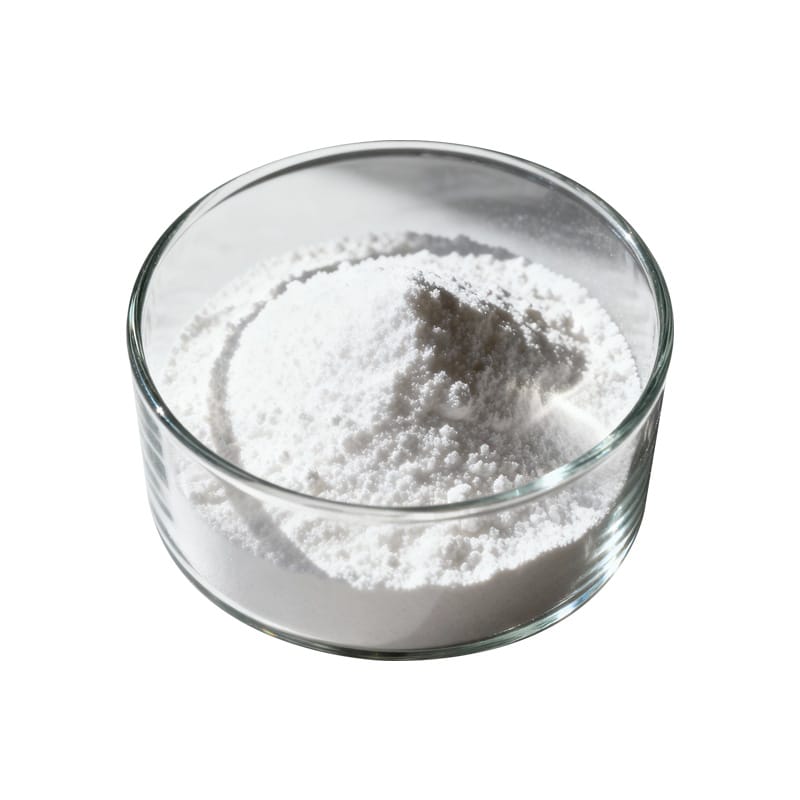
Sodium formate is generally supplied as a white crystalline material and is highly relevant where formulators need a soluble formate salt for industrial processing.
Haofang currently supplies sodium formate at a stated purity range of 92–99%, with applications including leather processing, drilling fluids, antifreeze and de-icing formulations, textile printing and dyeing, and rubber-related production.
Calcium Formate
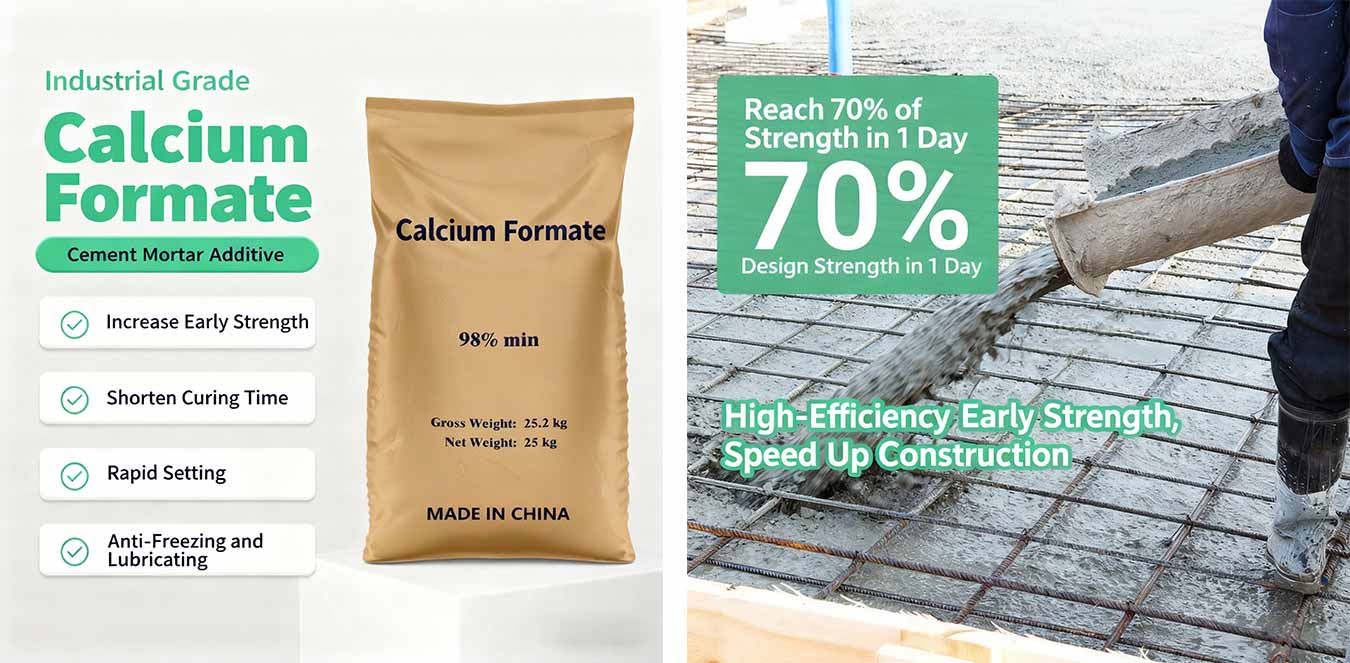
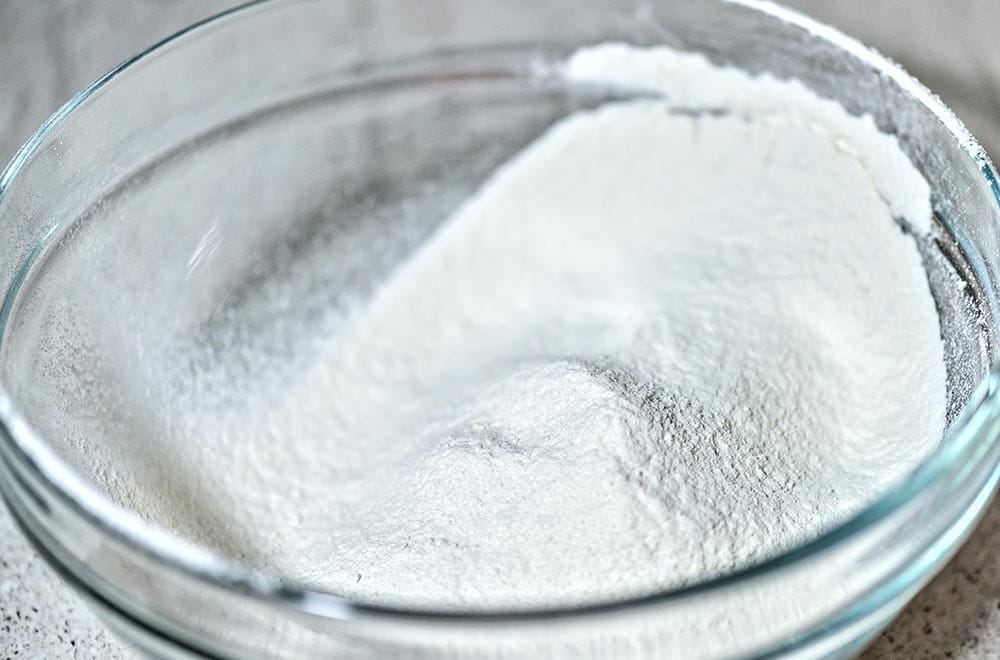
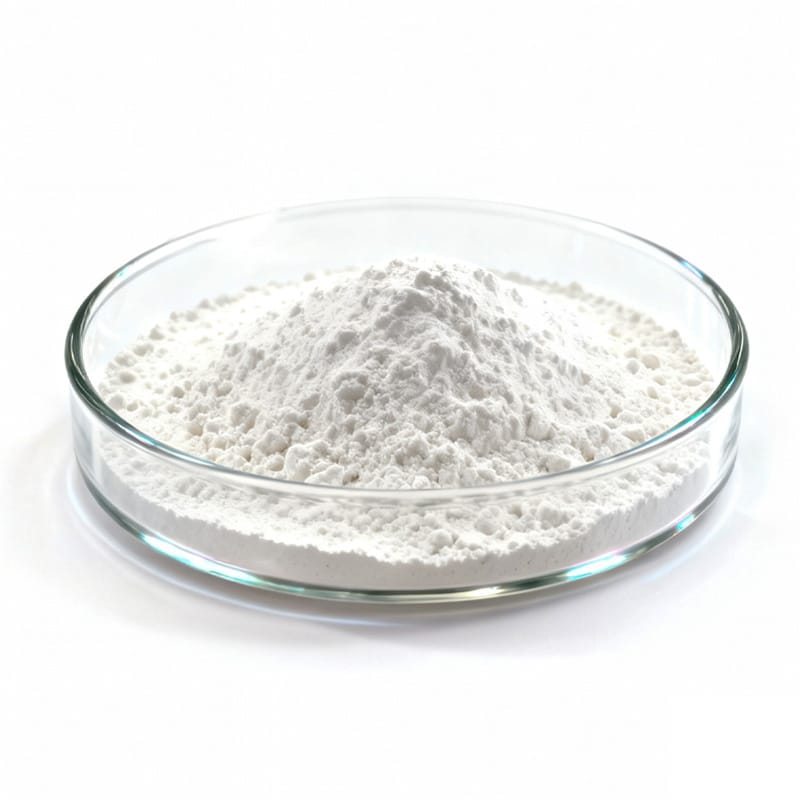
Calcium formate is typically supplied as a white powder and is especially relevant to construction chemistry.
In cementitious systems, it is used as an early-strength agent and setting accelerator. Its powder form also makes it practical for factory-produced dry-mix formulations where ingredients are accurately dosed before packaging. Haofang’s existing calcium formate range is positioned around concrete, mortar, feed, and leather-related applications.
Sodium Formate vs Calcium Formate at a Glance
| Selection Factor | Sodium Formate | Calcium Formate |
|---|---|---|
| Chemical formula | HCOONa | Ca(HCOO)₂ |
| Main metal ion | Sodium | Calcium |
| Typical physical form | White crystalline powder | White powder/crystalline material |
| Strong application cluster | Oilfield fluids, leather, de-icing, textile | Concrete, mortar, construction additives |
| Role in drilling fluids | Important formate salt for brine systems | More specialized depending on formulation |
| Role in cement systems | Formulation-dependent | Commonly used as setting/early-strength accelerator |
| Dry-mix suitability | Possible in specialized systems | Particularly suitable for dry construction formulations |
| Leather processing | Common industrial application | Also used in selected leather processes |
| Main sourcing question | Purity, solubility, impurities, application compatibility | Purity, moisture, particle behavior, accelerator performance |
| Direct substitutes? | No | No |
This table should be treated as an initial selection map rather than a formulation specification. Final performance depends on product grade, purity, other ingredients, temperature, water chemistry, processing conditions, and application requirements.
Where Is Sodium Formate Most Useful?
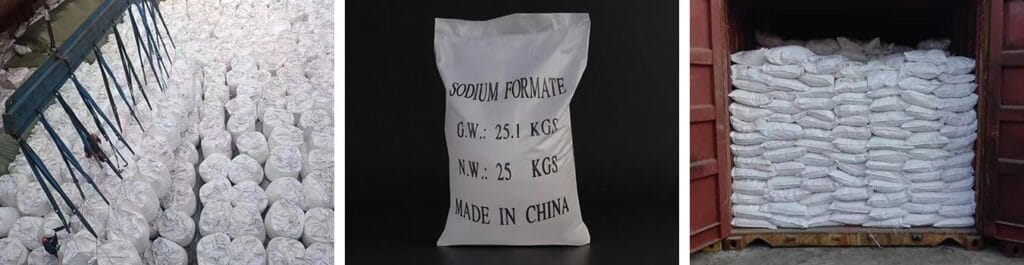
The keyword “sodium formate uses” may suggest that buyers are looking for a simple list of applications. For industrial purchasing, however, understanding why sodium formate is used is much more valuable.
Oil Drilling, Completion, and Formate Brines
Oilfield applications are one of the most technically important uses of sodium formate.
SLB identifies sodium formate, potassium formate, and cesium formate as alkali-metal formates used in drilling, drill-in, and completion fluids. Sodium formate solutions can be incorporated into solids-free brine systems, making the material relevant where fluid density and formation compatibility must be carefully managed.
Formate-based brines can reduce dependence on suspended weighting solids in certain fluid systems. This can be advantageous where operators need clear brines and want to limit solids that may contribute to formation damage.
For buyers in this market, specifying only “sodium formate powder” is usually insufficient.
Useful sourcing information can include:
- Required purity
- Target brine density
- Water chemistry
- Operating temperature
- Other salts in the formulation
- Required contaminant limits
- Packaging format
- Intended drilling, completion, or workover application
The selected grade should then be tested within the actual brine formulation.
Leather Processing
Leather manufacturing represents another traditional industrial application for sodium formate.
The material can be incorporated into processing systems where controlled chemical conditions are important during tanning and related operations. Haofang already positions sodium formate as one of its chemicals for leather-related industrial use.
For a tannery, procurement decisions should focus on consistency rather than only nominal purity.
Unexpected variation in moisture or impurities may influence downstream processing, particularly when dosing is standardized across large production batches.
De-Icing and Low-Temperature Formulations
Formate salts also appear in de-icing chemistry.
Sodium formate can be incorporated into specialized low-temperature systems where formulators are evaluating alternatives to conventional chloride-based chemistry. However, de-icing performance is formulation-specific, so buyers should evaluate freezing behavior, substrate compatibility, corrosion requirements, environmental constraints, concentration, and local application standards rather than assuming that every formate product performs identically.
Textile and Industrial Processing
Sodium formate is also used in textile printing and dyeing and in broader chemical processing applications. Haofang’s existing sodium formate product page identifies textile, rubber, drilling, leather, and de-icing among its primary industrial application areas.
These applications create an important SEO distinction:
Sodium formate is not simply a “construction chemical.”
Its commercial relevance is spread across multiple industrial sectors, making application-specific content especially important for attracting qualified buyers.
Where Does Calcium Formate Perform Better?
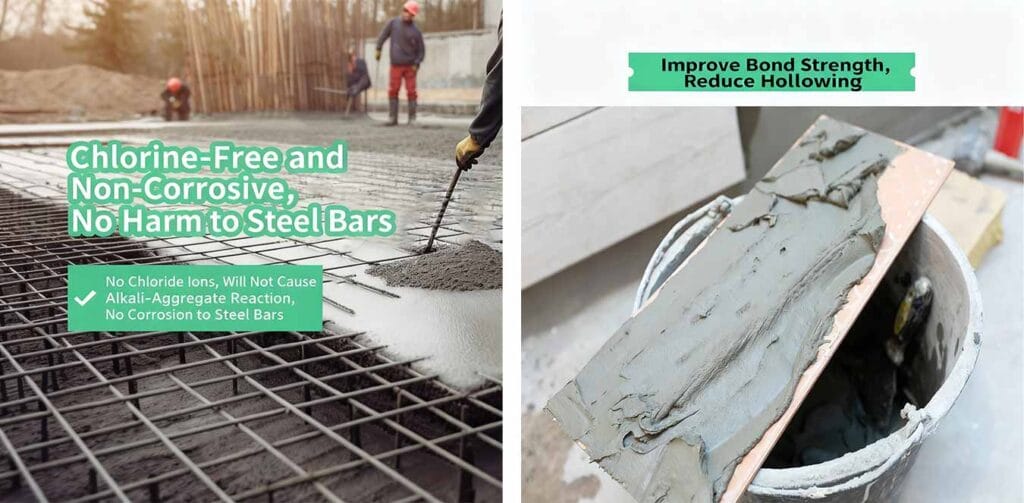
Calcium formate has a much clearer position in construction chemistry.
If a buyer manufactures mortar, grout, tile adhesive, concrete products, or other cementitious systems and wants to modify early hydration behavior, calcium formate is generally the more relevant product to investigate.
Concrete Early-Strength Development
One of the best-known calcium formate uses is its role as a concrete and cement accelerator.
Research on cementitious materials has shown that calcium formate can influence hydration, setting behavior, flow, and strength development. The exact response depends on formulation and dosage, meaning that the material should be optimized as part of the complete cement system rather than treated as a universal accelerator.
This makes calcium formate particularly interesting for:
- Precast elements
- Rapid repair materials
- Cement-based grouts
- Dry-mix mortars
- Tile adhesive formulations
- Low-temperature production
- Products requiring faster early strength
Haofang’s existing Calcium Formate in Concrete guide already explains the accelerator mechanism and dosage considerations in depth, so this comparison article should link readers to that technical resource rather than duplicate it.
Dry-Mix Mortar
Dry-mix manufacturers have an additional reason to evaluate calcium formate: physical handling.
Because the additive can be incorporated in powder form, it can be dosed together with cement, aggregates, cellulose ether, redispersible polymer powder, starch ether, and other dry ingredients.
This makes it convenient for factory-controlled formulations.
The challenge is compatibility.
An accelerator that provides useful early strength may also reduce working time if the dosage is excessive or if it interacts unfavorably with other additives.
Cold-Weather Construction
Lower temperatures generally slow cement hydration.
Calcium formate may be used to support faster early hydration and strength development under cooler production or construction conditions. However, an accelerator should not be confused with complete cold-weather protection.
Temperature control, curing, insulation, material temperature, and appropriate construction procedures still need to be managed.
Does More Calcium Formate Always Mean Faster Strength?
No.
This is an important point for both buyers and formulators.
A 2024 study evaluating alkali-metal formates together with calcium formate in reactive powder concrete found that performance changed according to formate type and proportion. The results underline that workability and mechanical performance must be optimized together rather than assuming that increasing the amount of calcium formate will automatically improve every property.
The practical lesson is simple:
Do not purchase an accelerator solely on the basis of “higher activity” or a supplier’s generic dosage recommendation.
Test the actual formulation.
Can Sodium Formate and Calcium Formate Be Used for the Same Application?
Sometimes their application fields overlap, but this does not make them interchangeable.
Both formates may appear in leather processing, selected oilfield systems, chemical manufacturing, or specialized cement chemistry. PubChem lists industrial applications for both compounds, while technical research also demonstrates that sodium and calcium formates can behave differently when used within cement-based formulations.
Same Chemical Family Does Not Mean Same Function
A useful comparison is to think in terms of the ion being introduced into the formulation.
With sodium formate, the system receives sodium and formate ions.
With calcium formate, it receives calcium and formate ions.
In a cementitious formulation, adding calcium may influence the chemical environment differently from adding sodium. In an oilfield brine, meanwhile, the solubility and density behavior of alkali-metal formates becomes particularly important.
The application should therefore determine the choice—not the similarity of the product names.
Which Formate Should Industrial Buyers Choose?
A useful selection process starts with function rather than price.
Choose Sodium Formate When the Main Requirement Is Related To:
- Formate-based drilling or completion fluids
- Industrial brine systems
- Leather processing
- Textile printing and dyeing
- Selected de-icing formulations
- General industrial chemical processing
- Applications specifically designed around sodium formate chemistry
SLB’s technical resources confirm the established use of sodium formate in drilling, drill-in, and completion-fluid systems.
Choose Calcium Formate When the Main Requirement Is Related To:
- Cement setting acceleration
- Faster early-strength development
- Precast concrete
- Dry-mix mortar
- Tile adhesive
- Repair mortar
- Cementitious grout
- Construction formulations requiring a powder accelerator
Research and Haofang’s existing product positioning both support calcium formate’s close relationship with cementitious and construction applications.
Do Not Choose Only From This List
Industrial formulations are rarely that simple.
A material that works in one customer’s mortar, drilling fluid, or tanning process may not produce the same result in another customer’s system.
The safer approach is:
Application definition → specification review → sample evaluation → laboratory test → production trial → bulk purchasing.
What Specifications Matter When Buying Sodium Formate or Calcium Formate?
Procurement teams often focus first on purity.
Purity matters, but it is not the only parameter that affects commercial performance.
1. Active Content and Purity
Confirm how the stated purity is measured and request a specification rather than relying only on a number in a quotation.
For sodium formate, Haofang currently lists a 92–99% purity range, showing why buyers need to specify the grade they actually require rather than assuming that all sodium formate shipments have identical active content.
2. Moisture
Moisture can affect storage, powder flow, effective active content, and dosing consistency.
This becomes especially important in dry-blend manufacturing where caked or poorly flowing materials can interfere with automated feeding.
3. Appearance and Particle Behavior
A buyer should understand whether the material is crystalline, fine powder, granular, or another physical form.
Particle characteristics may influence dissolution, dry blending, dust generation, feeding equipment, and dispersion.
4. Impurity Profile
For many industrial applications, the identity and consistency of impurities can matter as much as headline purity.
A customer should therefore review the full supplier specification and certificate of analysis when impurity limits affect the production process.
5. Batch Consistency
Industrial plants require predictable raw materials.
A sample that performs well does not guarantee that every commercial shipment will behave identically.
For this reason, procurement teams should compare certificates from multiple batches where possible and confirm how the supplier controls manufacturing consistency.
6. Packaging
Packaging should match storage conditions and consumption rate.
Haofang currently lists 25 kg and bulk packaging formats for its formate products, giving industrial customers options for routine production and higher-volume purchasing.
7. Technical Documentation
Before a bulk order, buyers should normally request the documentation relevant to their market and application, such as:
- Product specification
- TDS
- SDS
- COA
- Packaging information
- Storage recommendations
- Shelf-life information
- Export documentation where required
Documentation should be checked against the actual grade being purchased.
A Practical Buyer Decision Matrix
| Buyer Situation | Better Starting Point | Why |
| Producing formate drilling brine | Sodium Formate | Established alkali-metal formate used in oilfield brine systems |
| Manufacturing dry-mix mortar | Calcium Formate | Common powder accelerator for cementitious formulations |
| Improving precast early strength | Calcium Formate | Closely associated with setting and early hydration |
| Leather processing | Sodium Formate or application-specific evaluation | Both formate chemistry and process conditions matter |
| Textile processing | Sodium Formate | More directly associated with textile industrial use |
| Developing a cement accelerator | Calcium Formate | Calcium-based formate chemistry is more relevant |
| Producing specialized de-icing formulations | Sodium Formate / formulation evaluation | Application depends on total de-icer chemistry |
| Buying general industrial formate chemicals | Define process first | Chemical name alone is not enough for correct selection |
The phrase “better starting point” is intentional.
Industrial chemical selection should still be confirmed through application testing.
Common Buying Mistakes to Avoid
Buying Only by Price Per Ton
A lower quotation may not reduce the cost of the finished product.
If purity, moisture, dissolution, particle behavior, or batch consistency creates higher dosage requirements or production instability, the cheaper raw material can become the more expensive option in actual use.
Assuming All Purity Grades Perform the Same
Two materials with similar headline purity can still have different impurity profiles, physical behavior, and manufacturing consistency.
Always evaluate the full specification.
Treating Sodium Formate and Calcium Formate as Substitutes
Their names are similar because both are formate salts.
Their industrial roles are not identical.
Switching from one to the other without reformulation can change ionic composition, process behavior, or final product performance.
Skipping Sample Testing
A representative sample allows the buyer to test the material using the real process, equipment, water, additives, and operating conditions.
For formulation-sensitive industries such as construction chemicals and oilfield fluids, this is one of the most important purchasing steps.
Ignoring the Final Application
Do not ask only:
“What purity do you have?”
Tell the supplier:
- What you manufacture
- How the chemical will be used
- Your target performance
- Operating temperature
- Water or solvent environment
- Other major formulation ingredients
- Required packaging
- Expected consumption volume
Better input usually leads to better product selection.
How Sodium Formate and Calcium Formate Support Different Haofang Product Clusters
For Haofang, these two formates occupy useful but different positions within the product portfolio.
Sodium Formate naturally connects with:
- Oil Drilling Chemicals
- Leather Chemicals
- Industrial Chemical Raw Materials
- Textile Dyeing and Printing
- De-Icing Applications
Calcium Formate naturally connects with:
- Concrete Early Strength Admixtures
- Construction Additives
- Dry-Mix Mortar
- Construction Mortar
- RDP
- HPMC
- Cement-Based Formulations
This distinction is useful not only for buyers but also for technical purchasing teams looking to source several compatible raw materials from the same supplier.
A dry-mix mortar producer, for example, may need calcium formate alongside cellulose ether and redispersible polymer powder.
An oilfield customer evaluating sodium formate may also need PAC, CMC, xanthan gum, or other fluid-control additives.
The better procurement strategy is therefore to consider the complete formulation rather than treating each raw material as an isolated purchase.
Conclusion
The sodium formate vs calcium formate decision is primarily an application decision.
Sodium formate is particularly relevant to oilfield brines, drilling and completion fluids, leather processing, textile applications, de-icing formulations, and general industrial chemistry. Calcium formate is more closely associated with cementitious systems where manufacturers want to influence setting and early-strength development.
Neither material should be selected simply because it belongs to the formate family.
Industrial buyers should evaluate the required chemical function, product purity, moisture, physical form, impurity profile, batch consistency, technical documents, packaging, and performance under actual processing conditions.
For existing Haofang customers, the next step should be application-specific evaluation. Buyers can review the Sodium Formate product specifications for drilling, leather, textile, de-icing, and industrial applications, or the Calcium Formate product specifications for concrete, mortar, and related industrial systems before requesting samples for production testing.
FAQ
Is sodium formate the same as calcium formate?
No. Sodium formate is the sodium salt of formic acid, while calcium formate is the calcium salt. Their chemical composition and industrial application profiles are different.
What is sodium formate mainly used for?
Major industrial applications include drilling and completion-fluid systems, leather processing, de-icing formulations, textile processing, and other chemical manufacturing applications. Sodium formate is one of the alkali-metal formates used in oilfield fluids.
What is calcium formate mainly used for?
Calcium formate is widely associated with cement and concrete formulations, particularly where faster setting or early-strength development is required. It is also used in several other industrial applications.
Is calcium formate better than sodium formate for concrete?
For conventional cement acceleration and dry-mix construction applications, calcium formate is generally the more directly relevant material. However, research shows that formate performance depends on the complete cement formulation, so laboratory testing is still necessary.
Is sodium formate used in drilling fluids?
Yes. SLB identifies sodium formate as one of the alkali-metal formates used in drilling, drill-in, and completion fluids.
Can sodium formate replace calcium formate?
They should not be treated as universal substitutes. Replacing one with the other changes the cation introduced into the formulation and can change application performance.
What should I check when buying sodium formate?
Check the required purity, moisture, impurity limits, physical form, application compatibility, packaging, COA, SDS, and batch consistency. For drilling applications, also define the intended brine system and operating conditions.
What should I check when buying calcium formate?
Construction-chemical buyers should evaluate purity, moisture, powder consistency, dispersion, effect on setting time, early strength, compatibility with other admixtures, packaging, and batch consistency.
Should I select a formate chemical only by purity?
No. Purity is important, but industrial performance may also depend on impurities, moisture, physical form, dissolution or dispersion, formulation compatibility, and production consistency.
Can I test a sample before placing a bulk order?
Sample testing is strongly recommended for formulation-dependent applications. The most useful test uses the customer’s actual raw materials, water, process conditions, and target performance rather than an unrelated standard formulation.