Table of Contents
Introduction
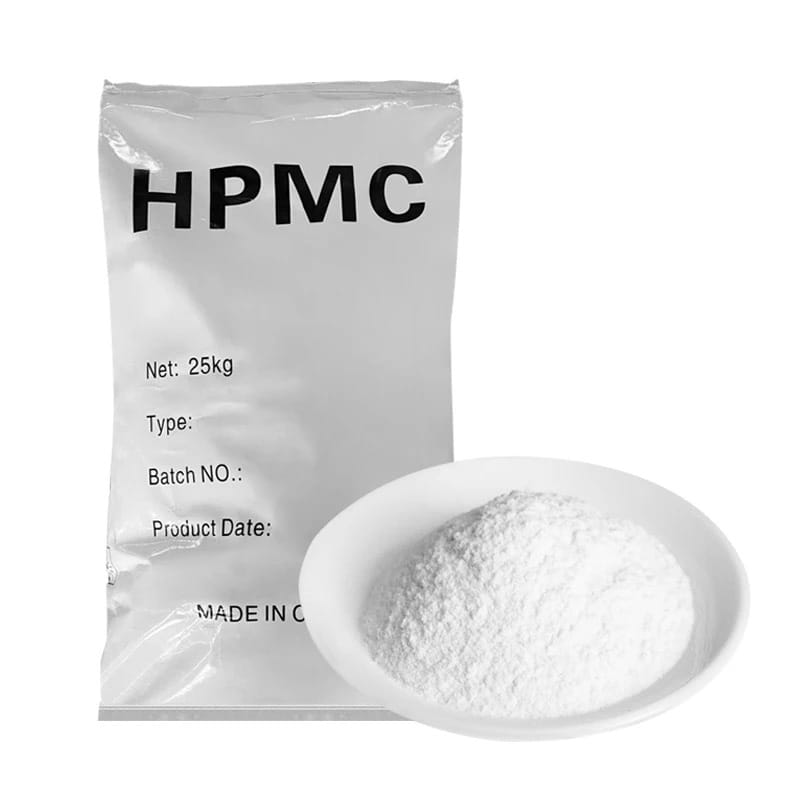
Hydroxypropyl methylcellulose is one of the most important functional additives used in modern dry mix mortar, but choosing an HPMC grade simply by selecting the highest available viscosity can lead to poor formulation results.
In cement-based mortar, HPMC contributes to water retention, rheology, consistency, workability and application behavior. However, increasing viscosity can also increase resistance during spreading, change wet mortar consistency and affect how the material behaves on a wall or under a tile.
The correct HPMC grade therefore depends on the finished product.
A tile adhesive, wall putty, plastering mortar, masonry mortar and self-leveling compound do not require exactly the same rheological behavior. Manufacturers should evaluate viscosity together with water retention, dissolution, dosage, temperature performance and compatibility with other additives.
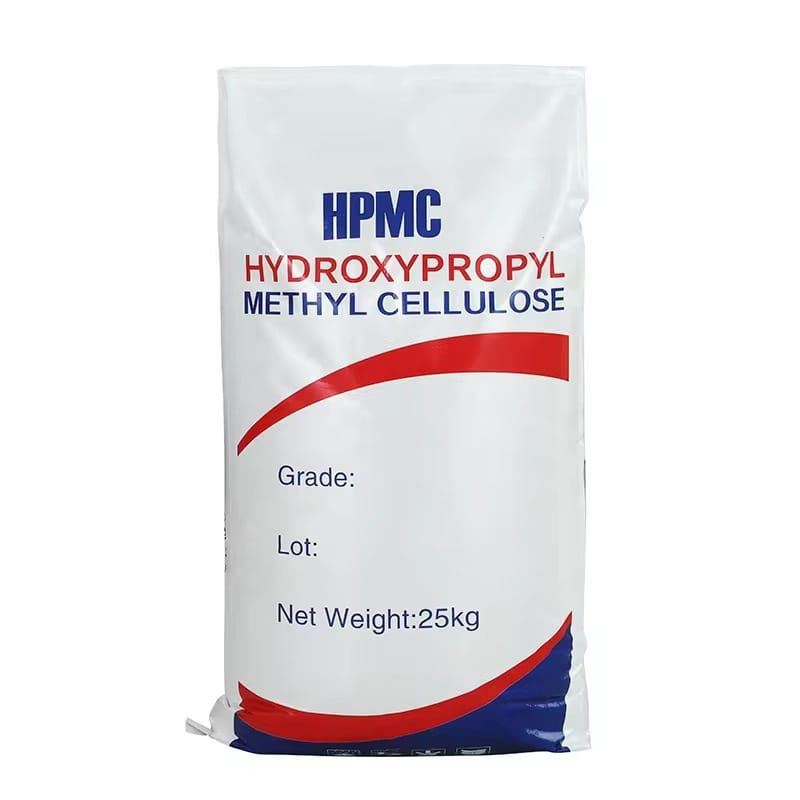
Haofang’s Hydroxypropyl Methylcellulose is positioned for dry-mix mortar, tile adhesives, cement mortars, plastering mortars, leveling compounds, gypsum materials and other construction systems.
The key question for formulators is not:
“Which HPMC has the highest viscosity?”
It is:
“Which HPMC viscosity gives this mortar the required balance of water retention, workability and application performance?”
Why Is HPMC Used in Dry Mix Mortar?
Dry mix mortar contains cementitious binders, fillers, aggregates and functional additives that remain dry until water is added on site or in a mixing system.
Once water is introduced, HPMC dissolves and influences the rheology of the fresh mortar.
Its main functions can include:
water retention,
thickening,
improved consistency,
better cohesion,
reduced sagging,
improved workability,
longer workable application time,
and better control of water movement within the mortar.
Research on HPMC-modified cement mortar has shown that cellulose ether can significantly influence water retention by modifying moisture transport within the fresh cementitious system. Research on the water retention mechanism of HPMC in cement mortar
These properties are particularly important in thin-layer construction materials, where water can be lost rapidly into absorbent substrates or through evaporation.
What Does HPMC Viscosity Mean?
HPMC viscosity generally describes the resistance to flow of an HPMC solution under specified test conditions.
A higher viscosity grade produces greater solution viscosity under the same standardized measurement conditions, but the number should never be interpreted without checking how it was measured.
Important variables include:
solution concentration,
measurement temperature,
instrument type,
spindle and rotational speed,
and test method.
For example, a viscosity measured using a 2% solution cannot automatically be compared directly with one measured using a different concentration.
This is an important purchasing issue.
Two suppliers may list apparently similar viscosity values while using different test conditions. Buyers should therefore compare the complete specification and test method rather than only the numerical viscosity value.
Does Higher HPMC Viscosity Mean Better Mortar?
No.
Higher viscosity can increase thickening and improve body in a fresh mortar, but it does not automatically create better overall performance.
If viscosity is too low, the mortar may lack sufficient cohesion or sag resistance.
If viscosity is excessively high, the mortar may become too sticky, difficult to spread or resistant to leveling.
The optimum region depends on the application.
This relationship can be summarized as follows:
| HPMC Viscosity Behavior | Possible Mortar Effect | What Formulators Should Check |
|---|---|---|
| Too low | Weak body or insufficient anti-sag behavior | Vertical stability and cohesion |
| Moderate | Balanced consistency and workability | Application-specific performance |
| Higher | Stronger thickening and sag resistance | Troweling resistance |
| Excessively high | Sticky or heavy application feel | Workability and spreading |
| Correctly balanced | Stable fresh mortar behavior | Water retention, open time and application |
The target should therefore be balanced rheology rather than maximum viscosity.
How HPMC Viscosity Affects Water Retention
Water retention is one of the most important reasons cellulose ether is added to cement-based dry mix mortar.
After mixing, mortar is often applied to porous surfaces such as concrete blocks, cement boards, masonry or plaster substrates. These materials can draw water away from the fresh mortar.
Environmental heat and airflow can also accelerate evaporation.
If water leaves the mortar too quickly, cement may not receive sufficient time and moisture for proper hydration. The result can include poor application behavior and reduced development of desired mechanical properties.
HPMC helps keep water within the fresh system.
However, water retention is not controlled by viscosity alone.
It can also be affected by:
HPMC dosage,
degree of substitution,
particle size,
dissolution rate,
temperature,
mortar composition,
water-to-binder ratio,
and substrate absorption.
Published studies and technical literature consistently identify dosage, viscosity and other cellulose-ether characteristics as variables affecting mortar water retention. HPMC water-retention research in cement mortar
This is why selecting HPMC exclusively from a viscosity number can be misleading.
How HPMC Changes Workability
Workability describes how easily fresh mortar can be mixed, transported, spread, combed or finished.
A well-formulated tile adhesive should spread smoothly under the trowel while maintaining enough body to hold the combed ridges.
A plastering mortar should stay cohesive while remaining comfortable to spread over a large surface.
A wall putty should feel smooth rather than excessively sticky.
HPMC influences these behaviors by changing the viscosity and internal water distribution of the fresh formulation.
Too little rheological control can cause:
poor cohesion,
water separation,
low sag resistance,
or unstable application.
Too much thickening can lead to:
heavy troweling,
poor spreadability,
excessive stickiness,
or difficult finishing.
The appropriate viscosity therefore depends heavily on how workers actually apply the finished mortar.
Choosing HPMC for Tile Adhesive
Tile adhesive places several simultaneous demands on cellulose ether.
The fresh adhesive should:
retain sufficient water,
spread easily,
maintain trowel ridges,
resist tile slip,
provide useful open time,
and allow appropriate tile adjustment.
Selecting an HPMC grade that focuses only on very high viscosity can create excessive trowel resistance.
Conversely, an HPMC grade that provides insufficient rheological control may allow poor ridge stability or unwanted movement after application.
For tile adhesive, manufacturers should evaluate at least:
water retention,
wet mortar consistency,
anti-slip behavior,
open time,
wetting of the tile,
trowel feel,
and compatibility with polymer additives.
Haofang’s HPMC is listed for tile adhesive and other cement-based mortar applications, while its Redispersible Latex Powder is intended to improve bonding strength, flexibility and water resistance in construction mortar.
These two additives therefore perform complementary rather than identical functions.
HPMC for Plastering and Rendering Mortar
Plastering mortar must remain workable over relatively large wall surfaces.
Important requirements typically include:
easy spreading,
good water retention,
stable consistency,
low sagging,
sufficient application time,
and acceptable finishing behavior.
An HPMC grade with excessive thickening can make plaster feel heavy during manual application.
A grade with insufficient rheological effect may make it harder to maintain consistency on vertical surfaces.
Formulators should therefore consider how the mortar is applied.
Hand-applied plaster and machine-applied mortar can place different demands on cellulose ether because pumping, mixing time and application speed may differ.
For machine application, dissolution behavior and particle characteristics may become especially important because the additive must develop functionality within a relatively short processing period.
HPMC for Wall Putty and Skim Coat
Wall putty and skim coat generally require a smoother application feel than many thicker cement mortars.
The formulation must spread into a relatively thin layer without excessive dragging.
In this application, HPMC can contribute to:
water retention,
smoothness,
consistency,
anti-sag behavior,
and workable application time.
But excessive viscosity can make the material feel sticky and difficult to scrape.
A putty manufacturer should therefore test not only laboratory viscosity but also practical application properties such as:
scraping resistance,
surface smoothness,
water demand,
drying behavior,
and sanding characteristics where relevant.
This illustrates a broader principle:
The correct HPMC grade is determined by finished-product behavior, not by the raw-material viscosity number alone.
HPMC for Self-Leveling Mortar
Self-leveling compounds require a different rheological balance.
Unlike vertical tile adhesive or plaster, the material must flow across a horizontal surface while maintaining stability and minimizing segregation.
Too much thickening can reduce flow and leveling.
Too little rheological control can contribute to sedimentation, bleeding or poor stability.
For this reason, high viscosity is not automatically desirable in self-leveling systems.
The HPMC selection must be coordinated with:
cement chemistry,
water demand,
superplasticizer,
defoamer,
fillers,
polymer powder,
and other rheology-modifying additives.
This is one of the clearest examples of why a universal “best HPMC viscosity” does not exist.
How HPMC Affects Sag Resistance
Sag resistance is particularly important for vertical applications such as tile adhesive, render and wall putty.
When mortar is placed on a wall, gravity causes the fresh material to move downward.
Increasing the internal structure of the formulation can help the mortar resist this movement.
HPMC contributes to that structure by modifying the viscosity and rheology of the aqueous phase.
However, sag resistance is rarely controlled by HPMC alone.
Other factors include:
water dosage,
aggregate grading,
binder content,
starch ether,
polymer powder,
thixotropic additives,
and total solids concentration.
If a mortar still sags after HPMC viscosity is increased, the correct response is not necessarily to keep increasing viscosity.
The complete formulation should be investigated.
Does Higher Viscosity Always Improve Open Time?
No.
Open time refers to the period during which an applied mortar—particularly tile adhesive—can still develop adequate contact and bonding when the tile is placed.
Water retention can help support useful open time because it reduces rapid water loss.
HPMC therefore plays an important role.
However, open time is influenced by much more than HPMC viscosity.
Other variables include:
ambient temperature,
humidity,
air movement,
substrate absorption,
cement type,
HPMC chemistry,
HPMC dosage,
polymer modification,
water content,
and layer thickness.
A formulation exposed to hot, dry and windy conditions can lose workable surface moisture much faster than the same product applied in a controlled laboratory environment.
Manufacturers should therefore evaluate open time under conditions that reflect the expected market.
How Temperature Changes HPMC Performance
Temperature deserves particular attention in dry mix mortar.
As application temperature increases, evaporation accelerates and mortar can lose water faster.
Cellulose ether performance can also change with temperature.
Technical literature on cellulose ethers notes that water-retention behavior can deteriorate as temperature rises, making the selection of the appropriate cellulose ether chemistry important for hot-weather construction.
This matters in regions where wall temperatures may become significantly higher than laboratory test temperatures.
For products intended for hot climates, formulators should evaluate:
water retention at elevated temperature,
open time,
surface skin formation,
application consistency,
and practical site performance.
Testing only at room temperature may not reveal actual field behavior.
HPMC Viscosity by Application: A Practical Framework
There is no single universal viscosity specification that fits every formulation, but manufacturers can use the following framework when developing products.
| Application | Main HPMC Requirement | Viscosity Consideration |
|---|---|---|
| Tile adhesive | Water retention, anti-slip, open time | Moderate to high rheological control |
| Plastering mortar | Workability and water retention | Balanced viscosity for easy spreading |
| Wall putty | Smooth application and consistency | Avoid excessive stickiness |
| Masonry mortar | Water retention and cohesion | Balanced general-purpose behavior |
| Self-leveling compound | Stability without restricting flow | Avoid excessive thickening |
| Repair mortar | Water retention and workability | Match placement and layer thickness |
| Gypsum system | Water control and application behavior | Grade must match gypsum chemistry |
These descriptions are selection directions, not fixed specifications.
Actual viscosity must be validated through formulation testing.
How Much HPMC Should Be Added?
There is no universal HPMC dosage suitable for every dry mix mortar.
The required amount depends on:
application,
HPMC grade,
target viscosity,
water retention requirement,
binder system,
aggregate grading,
temperature,
other additives,
and desired application behavior.
Using more HPMC does not automatically produce a better formulation.
Excessive addition may increase viscosity beyond the desired range, change air content, alter setting behavior or increase stickiness.
The most reliable method is to establish a formulation baseline and then adjust dosage systematically while measuring defined performance indicators.
For tile adhesive, this might include:
water retention,
open time,
slip,
tensile adhesion,
wetting,
and workability.
For plaster, spreading behavior and water retention may be more important.
Why HPMC and RDP Should Not Be Confused
HPMC and redispersible polymer powder are frequently used together, but they do different jobs.
A useful simplified comparison is:
| Additive | Primary Role |
|---|---|
| HPMC | Water retention and fresh-mortar rheology |
| RDP | Adhesion, flexibility and polymer modification |
| Calcium formate | Setting and early-strength modification |
| Combined system | Balanced dry-mix mortar performance |
Haofang’s existing technical content makes this distinction clear: calcium formate, HPMC and RDP are complementary rather than substitutes.
For example, raising HPMC viscosity cannot replace insufficient polymer modification when a tile adhesive needs greater flexibility.
Similarly, adding more RDP does not perform the same water-retention function as cellulose ether.
A good dry mix mortar formulation assigns each additive a clear functional role.
HPMC and Redispersible Polymer Powder in Tile Adhesive
The relationship between HPMC and RDP is particularly important in tile adhesives.
HPMC mainly influences the fresh mortar:
water retention,
rheology,
application behavior,
open time,
and consistency.
RDP mainly contributes to the polymer-modified hardened system, including:
adhesion,
flexibility,
deformability,
and water resistance.
Haofang’s guide to selecting redispersible polymer powder for dry-mix mortar explains that RDP grade selection also depends on the finished application rather than simply choosing one universal polymer powder.
For formulators, this means HPMC viscosity should be optimized alongside RDP rather than independently.
The final mortar must perform both while it is being applied and after it has cured.
How Calcium Formate Interacts with the System
Calcium formate is another additive commonly used in dry mix mortar, particularly where setting behavior and early strength are important.
Its role differs from HPMC.
HPMC focuses more strongly on water retention and rheology, while calcium formate influences early cement reaction and strength development.
This can create a formulation balance problem.
A mortar may need faster early strength while still requiring enough working time for practical installation.
For that reason, changing calcium formate dosage can require reassessing the complete formulation, including cellulose ether.
Haofang’s technical discussion of calcium formate in dry-mix mortar explains these complementary roles in more detail.
Why Mortar Can Become Too Sticky
One common formulation problem is excessive stickiness.
Increasing HPMC viscosity or dosage can increase cohesion, but beyond the optimum point the mortar may become difficult to spread.
Other causes may include:
excessive water-soluble polymer content,
incorrect water dosage,
fine filler distribution,
starch ether interaction,
binder composition,
or polymer powder characteristics.
When a mortar feels too sticky, formulators should not automatically replace HPMC.
Instead, evaluate:
HPMC viscosity,
dosage,
water demand,
other rheology modifiers,
and aggregate distribution.
The problem often comes from the total system.
Why Water Retention Can Still Be Poor with HPMC
Another common question is:
“Why does the mortar still lose water quickly even though HPMC has been added?”
Possible reasons include:
insufficient dosage,
unsuitable HPMC grade,
poor dissolution,
very high application temperature,
highly absorbent substrate,
excessively thin application,
incorrect water ratio,
or incompatibility within the formulation.
Particle size and dissolution behavior can also influence how quickly cellulose ether develops its effect during mixing.
If a product is intended for short mixing cycles or machine application, this factor becomes particularly relevant.
What Should Buyers Check When Comparing HPMC Grades?
Industrial buyers should request more than a product name and viscosity number.
Useful evaluation parameters include:
| Parameter | Why It Matters |
|---|---|
| Viscosity | Influences rheology and consistency |
| Viscosity test method | Allows valid comparison between suppliers |
| Moisture | Relevant to storage and product quality |
| pH | Supports formulation compatibility evaluation |
| Particle size | Influences dispersion and dissolution |
| Water retention performance | Critical for mortar application |
| Gel temperature | Relevant to elevated-temperature behavior |
| Batch consistency | Supports stable manufacturing |
| Application recommendation | Helps match grade to finished product |
| COA availability | Supports incoming quality control |
Buyers should also provide the supplier with actual application information.
Simply asking for “high-viscosity HPMC” does not give enough technical context.
A better request would specify:
tile adhesive,
skim coat,
plastering mortar,
masonry mortar,
self-leveling compound,
or another defined application.
Should You Select HPMC Only From the TDS?
A technical data sheet is an important starting point, but it cannot replace formulation testing.
Two HPMC products with similar listed viscosity can behave differently because of differences in:
substitution chemistry,
particle treatment,
dissolution rate,
gel temperature,
purity,
and production consistency.
The actual dry mix system also contains many interacting raw materials.
For this reason, buyers and formulators should test candidate HPMC grades in the actual mortar formula.
Important tests may include:
mixing behavior,
water demand,
water retention,
consistency,
trowel feel,
sag resistance,
open time,
and final mechanical properties.
Laboratory testing followed by application trials provides a much more reliable basis for selection than comparing a single viscosity value.
Conclusion
Selecting hydroxypropyl methylcellulose for dry mix mortar requires more than choosing the highest available viscosity.
HPMC viscosity affects fresh mortar consistency, water retention, workability and sag resistance, but the optimum grade depends on the final application.
Tile adhesive needs a balance of water retention, open time and anti-slip behavior.
Plaster requires smooth spreading and sufficient workable time.
Wall putty needs consistency without excessive stickiness.
Self-leveling compounds require stability while retaining flow.
The best formulation therefore comes from balancing HPMC viscosity with dosage, temperature performance, water demand and the other additives in the system.
Haofang’s Hydroxypropyl Methylcellulose is intended for multiple construction-mortar applications, while Redispersible Latex Powder can be incorporated where polymer modification, adhesion and flexibility are required.
Rather than asking for the highest-viscosity grade, dry mix mortar manufacturers should define the finished application and required performance first, then select and validate the HPMC grade through formulation testing.
FAQ
What HPMC viscosity is best for dry mix mortar?
There is no single best viscosity for every dry mix mortar. The correct grade depends on the application, water retention target, workability, sag resistance, other additives and processing conditions.
Does higher HPMC viscosity improve water retention?
Increasing viscosity can influence water retention, but viscosity is only one factor. Dosage, substitution chemistry, particle size, temperature and mortar composition also affect water retention.
Is high-viscosity HPMC always better for tile adhesive?
No. Excessively high viscosity can make tile adhesive sticky or difficult to spread. Tile adhesive requires a balance between water retention, anti-slip performance, open time and trowel workability.
Can HPMC replace redispersible polymer powder?
No. HPMC mainly controls water retention and fresh-mortar rheology, while RDP primarily contributes polymer modification, adhesion and flexibility. They often work together.
Why does mortar become sticky after adding HPMC?
Possible causes include excessive viscosity, excessive dosage, low water content or interactions with other rheology modifiers and fine fillers. The complete formulation should be evaluated.
What information should I give an HPMC supplier?
Provide the intended application, desired workability, water-retention requirements, climate conditions, existing formulation and any viscosity test method or specification already used.
Need Help Selecting HPMC for Dry Mix Mortar?
The correct cellulose ether should be selected around the finished mortar rather than viscosity alone. Review Haofang’s Hydroxypropyl Methylcellulose and complementary Redispersible Latex Powder when developing tile adhesive, plaster, putty, repair mortar and other dry-mix construction systems.